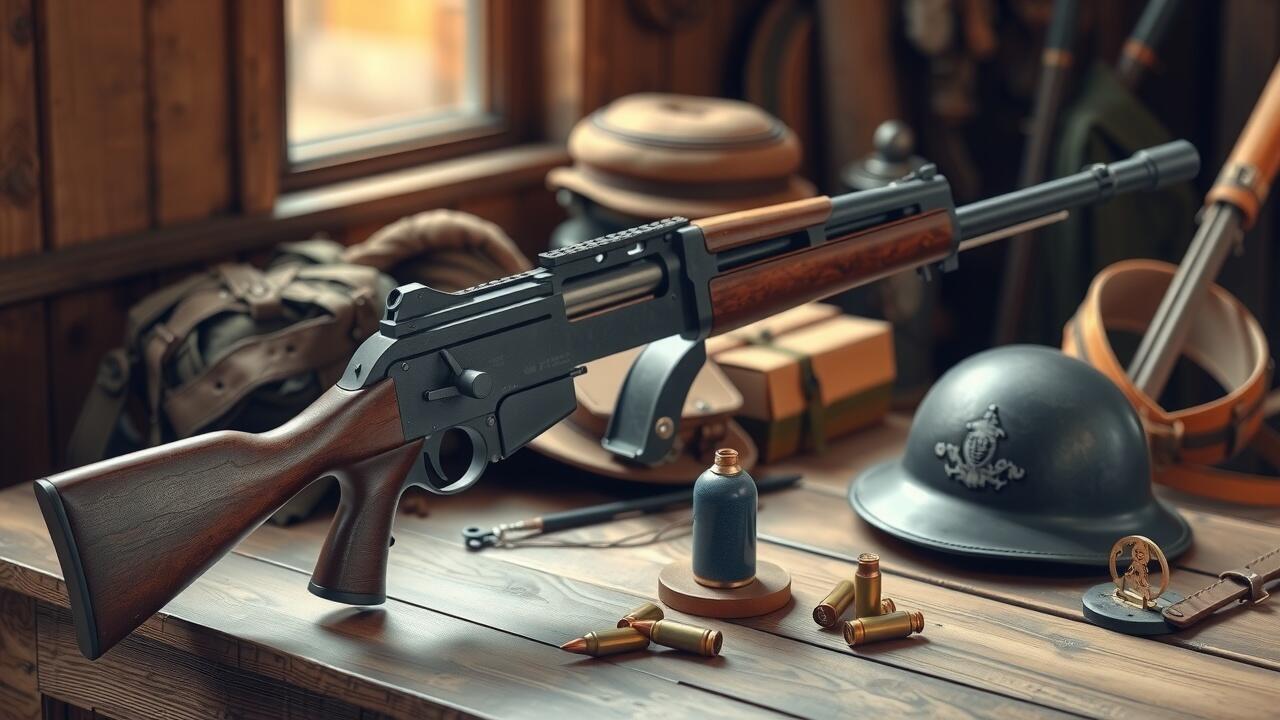
Key Takeaways
- Summary of the Châtellerault FM 1924/29 Light Machine Gun and its features.
- Examination of design and technological advancements in the weapon.
- Assessment of operational effectiveness in armed forces.
- Evaluation against other light machine guns in service.
- Discussion of its historical significance and impact on future designs.
Overview of the Châtellerault FM 1924/29 Light Machine Gun
The Châtellerault FM 1924/29 Light Machine Gun represents a significant advancement in the design of light machine guns during the early 20th century. Developed in France, this weapon was an evolution of the earlier FM 24/29 light machine guns, combining innovative features that improved its operational effectiveness. The model 1924/1929d machine gun utilized an efficient gas-operated mechanism, making it comparable to contemporaries like the type 96 light machine gun and the type 99 light machine gun from Japan. With its robust construction and reliable performance, the Châtellerault FM 1924/29 Light Machine Gun was instrumental for French infantry units throughout its service, influencing future designs and establishing a legacy that would resonate through later military innovations.
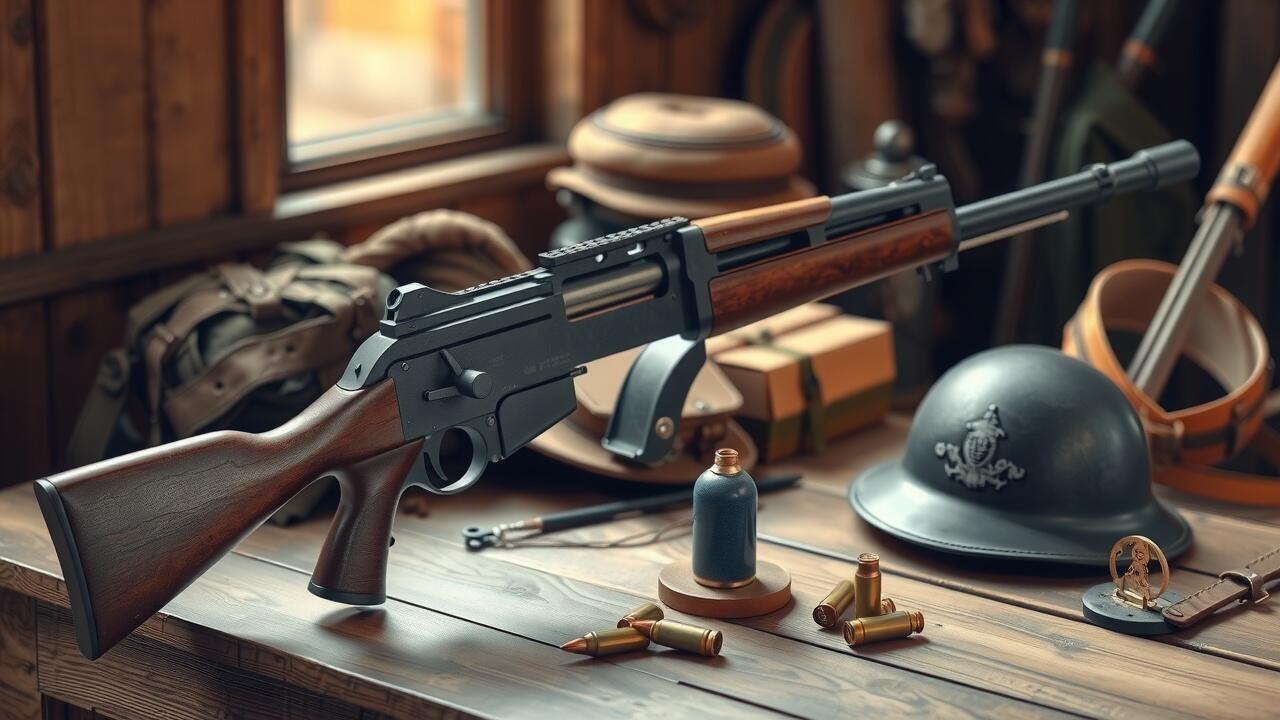
Historical Context and Development
The Châtellerault FM 1924/29 Light Machine Gun emerged during a period marked by rapid advancements in firearms technology. As nations began to recognize the importance of rapid-fire support weapons, various models such as the type 11 light machine gun and type 99 light machine guns were developed. The FM 1924/29 was designed to meet these evolving military needs, combining features seen in predecessors like the Bren light machine gun and the Madsen machine gun. Its development was influenced by earlier designs, including the Soviet degtyaryov machine gun, which laid the groundwork for the capabilities expected from contemporary light machine guns.
France sought to modernize its arsenal in the interwar years, leading to the conception of the Châtellerault FM 1924/29 Light Machine Gun. This weapon was crafted to fill the tactical gap between standard infantry rifles and heavier machine guns, reflecting a strategic shift towards more versatile and mobile combat. As countries prepared for the inevitable conflicts of the late 1930s, the FM 1924/29 represented a significant leap in light machine gun technology, distinguishing itself with reliability and ease of use on the battlefield.
Don't miss The Armory Life's article on the Châtellerault FM 1924/29 light machine gun.
Key Specifications and Features
The Châtellerault FM 1924/29 Light Machine Gun, or FM mle 1924, was a significant advancement in the design of machine guns during the early 20th century. Developed by the manufacture d'armes de Châtellerault, this weapon featured a gas-operated mechanism and was chambered for the 7.5mm French cartridge. Weighing around 10.5 kg, the FM24/29 was designed for versatility on the battlefield. Its quick-change barrel allowed for sustained fire, distinguishing it from contemporaries like the Reibel machine gun and the Browning Automatic Rifle (BAR).
The FM 1924/29 displayed remarkable adaptability through its various operational features. Equipped with a 30-round magazine, it provided a higher rate of fire compared to the M1918 Browning Automatic Rifle (BAR). This light machine gun could be deployed in both infantry and support roles, making it a crucial asset during engagements. Its ability to perform effectively in both offensive and defensive scenarios underscored the innovative engineering behind the Châtellerault FM 1924/29 Light Machine Gun.
Design and Engineering Innovations
The Châtellerault FM 1924/29 Light Machine Gun showcases remarkable design and engineering innovations that set it apart from its contemporaries. One of its standout features is the unique firing pin mechanism, which allows for consistent and reliable firing, akin to the precision found in a high-quality revolver or pistol. Utilizing a bottleneck cartridge, the FM 1924/29 effectively bridges the gap between rifle cartridges and heavier machine guns, providing versatility on the battlefield. Its design elements also reflect a balance of weight and firepower, positioning it favorably against other light machine guns such as the aa-52 machine gun. This innovative approach not only enhanced its operational capabilities but also influenced future developments in light machine gun technology.
Mechanism and Operation
The Châtellerault FM 1924/29 Light Machine Gun operates using a gas-operated mechanism, allowing it to efficiently fire gun cartridges in rapid succession. Its design borrows elements from earlier models, including the Chauchat machine gun, while introducing improvements for reliability and ease of use. The incorporation of pistol grips enhances handling, making it easier for soldiers to maneuver during combat situations. The FM 24/29D variant showcases advancements that further refine its operational capabilities.
This light machine gun functions similarly to the Browning automatic rifle but is more versatile in various military applications. Its configuration allows for both sustained fire and mobility, positioning it as a precursor to the general-purpose machine gun concept. The Châtellerault FM 1924/29 Light Machine Gun provides a distinct operational profile that has influenced subsequent designs in the evolution of light machine guns.
Materials and Construction Techniques
The Châtellerault FM 1924/29 Light Machine Gun was engineered with a focus on robust performance and reliability. Utilizing high-quality materials such as steel for its frame and mechanisms, it offered durability crucial for military applications. The design incorporated features like a pistol grip for improved handling and aiming, which distinguished it from contemporaneous firearms like the Thompson submachine gun. Notably, the lightweight construction made it effective in various combat scenarios, complementing the efficiency of automatic rifles of its time.
Construction techniques employed in the FM 24/29 emphasized both functionality and ease of production. A combination of machining and stamping methods allowed for streamlined manufacturing processes, essential during periods of high demand. The design innovatively balanced weight and stability, ensuring that soldiers could maneuver effectively in the field. With components designed for quick assembly and maintenance, the Châtellerault FM 1924/29 Light Machine Gun became a reliable choice among infantry units, influencing subsequent designs and approaches in firearms technology.
- The use of high-quality steel enhances the durability and longevity of the weapon.
- Incorporation of a pistol grip improves user handling and aiming precision.
- Lightweight design facilitates easy maneuverability in various combat situations.
- Machining and stamping methods streamline the manufacturing process for increased efficiency.
- Quick assembly and maintenance features allow for rapid field repairs by soldiers.
- The design's balance of weight and stability sets a standard for future firearm developments.
- Influential in shaping modern automatic firearms and their construction techniques.
Performance in Military Applications
The Châtellerault FM 1924/29 Light Machine Gun played a significant role in various military conflicts of its time. It emerged as a reliable light support weapon, offering versatility that complemented other firearms, such as the Hotchkiss machine gun and the Charlton automatic rifle. Utilizing a specific cartridge, this automatic weapon distinguished itself through its firepower and ease of maneuverability. The Châtellerault FM 1924/29 Light Machine Gun was favored for its capacity to deliver sustained fire, allowing infantry units to maintain suppressive fire during engagements. Its design and engineering innovations contributed to the effectiveness of troops on the battlefield, establishing it as a notable asset among the guns of its era.
Usage in Various Conflicts
The Châtellerault FM 1924/29 Light Machine Gun played a significant role in various military conflicts, notably during World War II. Deployed primarily by French forces, this 7.5×54mm French light machine gun provided much-needed fire support, complementing standard infantry rifles. Its reliability and rate of fire made the Châtellerault FM 1924/29 a preferred choice over the mle1924 machine gun in frontline engagements. Troops valued its manageable weight and versatility, ensuring it was an essential asset in combat scenarios.
In the hands of its users, the Châtellerault FM 1924/29 Light Machine Gun demonstrated its effectiveness against opposing forces. The weapon's design allowed for sustained fire, which proved crucial during skirmishes and larger battles alike. The transition from traditional rifles to the new machine gun concept marked a strategic evolution in warfare tactics. The châtellerault fm 1924/29 light machine gun exemplified this shift, highlighting the importance of light machine rifles for infantry units during the tumultuous warfare of the 20th century.
- Contributed significantly to French military operations during World War II.
- Enhanced fire support capabilities for infantry squads in various battle scenarios.
- Served effectively in both defensive and offensive engagements.
- Gained recognition for its reliability in harsh combat conditions.
- Played a role in changing warfare tactics, emphasizing the need for lighter, more mobile weaponry.
- Utilized by several other nations and forces in post-war conflicts.
- Continued to influence the design of future light machine guns in subsequent decades.
Effectiveness and Tactical Advantages
The Châtellerault FM 1924/29 Light Machine Gun became notable for its effectiveness on the battlefield, particularly due to its ability to utilize a shorter rifle cartridge, which enhanced its maneuverability. This efficient machine gun was designed to provide a balance between firepower and weight, ensuring that troops could carry it without significant strain. Unlike some German machine guns of the time, which tended to be heavier and less mobile, the Châtellerault was well-suited for both offensive and defensive roles, allowing for sustained fire in various combat situations.
Tactical advantages of the Châtellerault FM 1924/29 Light Machine Gun stemmed from its unique design features, which included a quick-change barrel and a reliable feeding mechanism that handled machine gun cartridges effectively. Compared to the AAT-52 machine gun and other contemporaneous machine gun models, the Châtellerault was noted for its accuracy and rate of fire. These capabilities made it an indispensable asset in the hands of infantry units, allowing them to dominate in skirmishes while providing suppressive fire against enemy positions and talk guns.
Comparison with Other Light Machine Guns
The Châtellerault FM 1924/29 Light Machine Gun emerged during a period of intense innovation in late firearms, setting a standard for subsequent designs. It distinguished itself from contemporaries, which often struggled with issues like excessive weight or reliability, leading some to label them as poor machine guns. Unlike twin-mounted machine guns that required complex coordination, the FM 1924/29 offered a more streamlined operation with its automatic rifle design. Utilizing a versatile service cartridge, it catered to the evolving demands of warfare, outperforming many other machine rifle models of the era. This combination of features and reliability solidified the Châtellerault FM 1924/29 Light Machine Gun's reputation and influence in the realm of light machine guns.
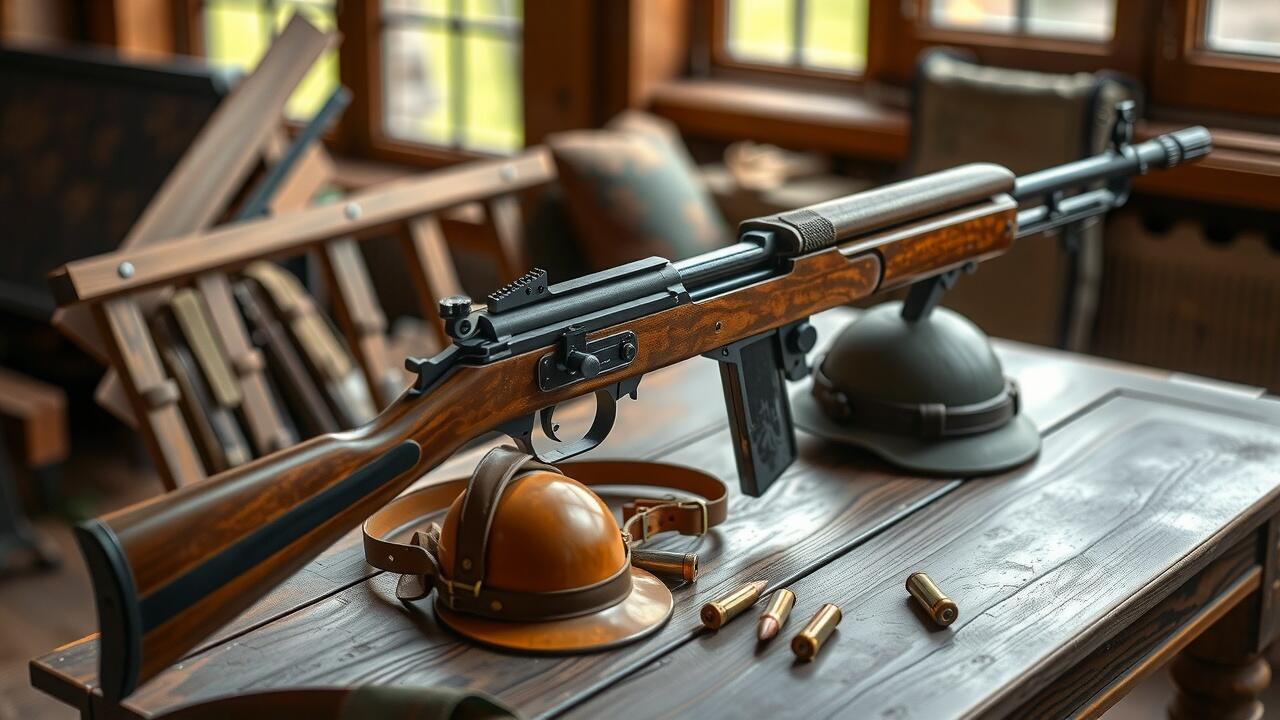
Châtellerault FM 1924/29 vs. Other Contemporaries
The Châtellerault FM 1924/29 Light Machine Gun emerged as a formidable contender among light machine guns of its time. Utilizing the French rifle cartridge, this robust firearm offered exceptional reliability and accuracy, particularly noted for its uninterrupted firing capability. The mle 1924-29 was designed to function seamlessly in various combat scenarios, allowing soldiers to lay down suppressive fire with minimal interruption, setting a high standard for light machine guns during the interwar period.
In comparison to its contemporaries, the Châtellerault FM 1924/29 Light Machine Gun distinguished itself through its innovative use of the rimless bottleneck cartridge, enhancing its performance and adaptability. While other light machine guns struggled with reliability issues, the FM 1924/29 maintained a consistent rate of fire, paving the way for future rifles. This design philosophy influenced numerous subsequent models, reflecting the efficacy and tactical advantages of the Châtellerault's engineering.
Evolution of Light Machine Guns Post-1924/29
The Châtellerault FM 1924/29 Light Machine Gun marked a significant turning point in the evolution of infantry weapons. Its design influenced the development of several firearms that followed, incorporating features that would become standard in light machine guns. The adoption of a new cartridge allowed for greater firepower and flexibility on the battlefield, catering to the needs of modern warfare. The sharp taper of the gun's body design also enabled easier handling and maneuverability, setting a precedent for future lightweight models.
As military tactics evolved, so too did the design principles behind light machine guns. The FM 1924/29's functionality paved the way for enhancements in subsequent models, leading to the refinement of features such as magazine capacity and rate of fire. The integration of elements from the Châtellerault FM 1924/29 Light Machine Gun into later designs underscored the shift toward more effective military cartridges that could sustain prolonged engagements. These innovations shaped the standard light machine gun framework, underpinning the development of new firearms in the decades that followed.
Legacy and Influence
The Châtellerault FM 1924/29 Light Machine Gun played a significant role in shaping the future of light machine guns, influencing both design and operational tactics in subsequent models. Its reliable weapon characteristics, coupled with the introduction of a heavy bullet variant, showcased effective firing capabilities that were emulated in later designs. The tactical advantages it offered, including the efficient taper in its barrel, allowed gunners to adapt to various combat scenarios. Comparisons with the U.S. Bar M1918 highlighted its effectiveness on the battlefield, while variations like the M1924/29D and M1931 demonstrated its evolutionary impact within military arsenals. This French light machine cemented its place in history by setting standards that informed the development of future automatic firearms.
Impact on Later Designs
The Châtellerault FM 1924/29 Light Machine Gun set a benchmark for future designs in the realm of light support weapons. Its innovative use of a rear trigger mechanism allowed for more intuitive handling during sustained fire, which was crucial in various combat scenarios. The adaptation of standard ammunition, such as the 7.5×54mm French cartridge, highlighted the importance of logistical compatibility, paving the way for later models like the M1924 and M1931. Discussions in platforms like forums.gunboards.com/showthread.php reflect on how the FM 1924/29 influenced the development of subsequent light machines, with many subsequent designs incorporating similar ergonomic and operational features.
The characteristics of the FM 1924/29 shaped the ideas for future weaponry, especially in terms of portability and ease of use. The design elements established by the Châtellerault machine not only enhanced firepower but also influenced the operational tactics of infantry units. Many later models, including variants of the BAR, drew inspiration from the proven concepts introduced by the FM 1924/29. This legacy is evident in how the light machine gun evolved to meet the changing demands of modern warfare, ensuring that the innovations of the FM 1924/29 remained relevant well into the future.
Conclusion
The Châtellerault FM 1924/29 Light Machine Gun stands as a significant advancement in the evolution of automatic firearms. Developed amidst the historical context of interwar military innovations, this weapon was designed to fulfill the needs of armed forces transitioning to more mobile tactics. Its usage during various conflicts, including World War II, underscores its effectiveness as a reliable machine, particularly in scenarios like the defense of the Maginot Line. Notably, the FM 1924/29's chamber compatibility and innovative design elements have influenced subsequent models in military arsenals. This light machine gun not only played a crucial role in battles but also contributed to the global discourse surrounding firearms, as documented by resources like ww2db, and continues to be a topic of interest in military history pubs.
FAQS
What is the Châtellerault FM 1924/29 Light Machine Gun?
The Châtellerault FM 1924/29 is a French light machine gun that was developed in the early 20th century, specifically designed to provide infantry units with a reliable and efficient automatic firearm.
How did the Châtellerault FM 1924/29 improve upon previous machine gun designs?
This light machine gun featured innovative design and engineering techniques, such as a gas-operated mechanism and a quick-change barrel, which allowed for sustained fire and reduced overheating during prolonged engagements.
In which conflicts was the Châtellerault FM 1924/29 used?
The FM 1924/29 was utilized in various military conflicts, including World War II and the Indochina War, where it served as a primary support weapon for infantry units.
What are the key specifications of the Châtellerault FM 1924/29?
Some key specifications include a caliber of 7.5x54mm, a weight of approximately 10 kg (22 lbs), and a rate of fire of around 500 rounds per minute, making it suitable for various combat scenarios.
How does the Châtellerault FM 1924/29 compare to other light machine guns of its time?
The FM 1924/29 was known for its reliability and ease of use, attributes that set it apart from contemporaries like the Bren gun and the Lewis gun, particularly in terms of handling and performance in the field.
What are the specifications and historical significance of the Châtellerault FM 1924/29 light machine gun compared to a heavy machine gun and other firearms used in WWII, such as the Mac Châtellerault and the LeMat revolver?
The Châtellerault FM 1924/29 is a significant light machine gun originating from France and uses a 7.5×54mm French cartridge. It was designed in the interwar period and served during WWII, demonstrating a balance of firepower and portability compared to heavier machine guns. The M1924/29D and M1931 variants improved its reliability. In contrast, the LeMat revolver represented a different class of firearm, combining a revolver with a shotgun barrel, showing the diversity of armaments during the same historical era.
How does the Châtellerault FM 1924/29 compare to a heavy machine gun and other WWII weapons like the Mac Châtellerault and LeMat revolver?
The Châtellerault FM 1924/29 is specifically classified as a 7.5×54mm French light machine gun, which distinguishes it from heavier alternatives such as a heavy machine gun. In comparison to the WWII Mac Châtellerault, the FM 1924/29 offers different operational capabilities. Additionally, while the scale LeMat revolver serves a distinct role as a sidearm, the M1924/29D and M1931 models of the FM 1924/29 represent significant advancements in light machine gun design during its era.
What is the role of the Châtellerault FM 1924/29 in the evolution of light machine guns, specifically in relation to models like the m1924/29d and m1931?
The Châtellerault FM 1924/29 played a significant role in the evolution of light machine guns, serving as a precursor to later models such as the m1924/29d and m1931. Its design and features influenced subsequent developments in automatic firearms, showcasing advancements in firepower and usability on the battlefield. The m1924/29d and m1931 further refined these concepts, contributing to the overall effectiveness of light machine guns during their respective periods.
How did the Châtellerault FM 1924/29 influence the development of light machine guns such as the m1924/29d and m1931?
The Châtellerault FM 1924/29 played a significant role in the evolution of light machine guns, influencing subsequent designs like the m1924/29d and m1931 by incorporating features that enhanced portability, rate of fire, and overall effectiveness in combat situations.
What are the design innovations of the Châtellerault FM 1924/29 that distinguish it from its predecessors, especially models like the m1924/29d and m1931?
The Châtellerault FM 1924/29 introduced several design innovations that set it apart from earlier models, including the m1924/29d and m1931. These innovations included advancements in ergonomics, reliability, and a more effective cooling system. The improvements made by the Châtellerault FM 1924/29 significantly enhanced its operational effectiveness on the battlefield, influencing subsequent development in light machine gun technology.
What are the differences in performance and design between the Châtellerault FM 1924/29 and similar light machine guns like the m1924/29d and m1931?
The Châtellerault FM 1924/29 offers distinctive performance attributes that set it apart from other light machine guns, particularly the m1924/29d and m1931. While both the m1924/29d and m1931 feature advancements in design and reliability, the FM 1924/29 was notable for its balance between maneuverability and firepower, making it a significant step in the evolution of light machine guns during its time.
How did the introduction of the Châtellerault FM 1924/29 impact the development of light machine guns, particularly with respect to subsequent models like the m1924/29d and m1931?
The Châtellerault FM 1924/29 significantly influenced the design and functionality of light machine guns, serving as a pivotal model that introduced innovations which were later incorporated into subsequent designs such as the m1924/29d and m1931. This evolution showcased advancements in reliability and ease of use that would set new standards for future light machine gun development.
What advancements in technology did the Châtellerault FM 1924/29 introduce that were later seen in models like the m1924/29d and m1931?
The Châtellerault FM 1924/29 introduced several advancements in design and functionality that influenced further developments in light machine guns. Features such as improved cooling systems and enhanced accuracy mechanisms set a foundation for subsequent models, namely the m1924/29d and m1931, which incorporated these technological advancements for better performance in combat situations.
What are the key differences between the Châtellerault FM 1924/29 and newer light machine gun models like the m1924/29d and m1931?
The key differences between the Châtellerault FM 1924/29 and newer light machine gun models like the m1924/29d and m1931 include advancements in fire rate, weight distribution, and ammunition capacity. The m1924/29d and m1931 feature enhancements that improve reliability and ergonomics, reflecting the evolution of design and technology in light machine guns.
What features and characteristics of the Châtellerault FM 1924/29 contributed to its popularity when compared to later models like the m1924/29d and m1931?
The Châtellerault FM 1924/29 became popular due to its lightweight design, ease of handling, and reliable firing mechanism. These features set a standard that influenced the development of later models such as the m1924/29d and m1931, which built upon the foundational elements established by the FM 1924/29.